Dynamics Lab


About the Lab

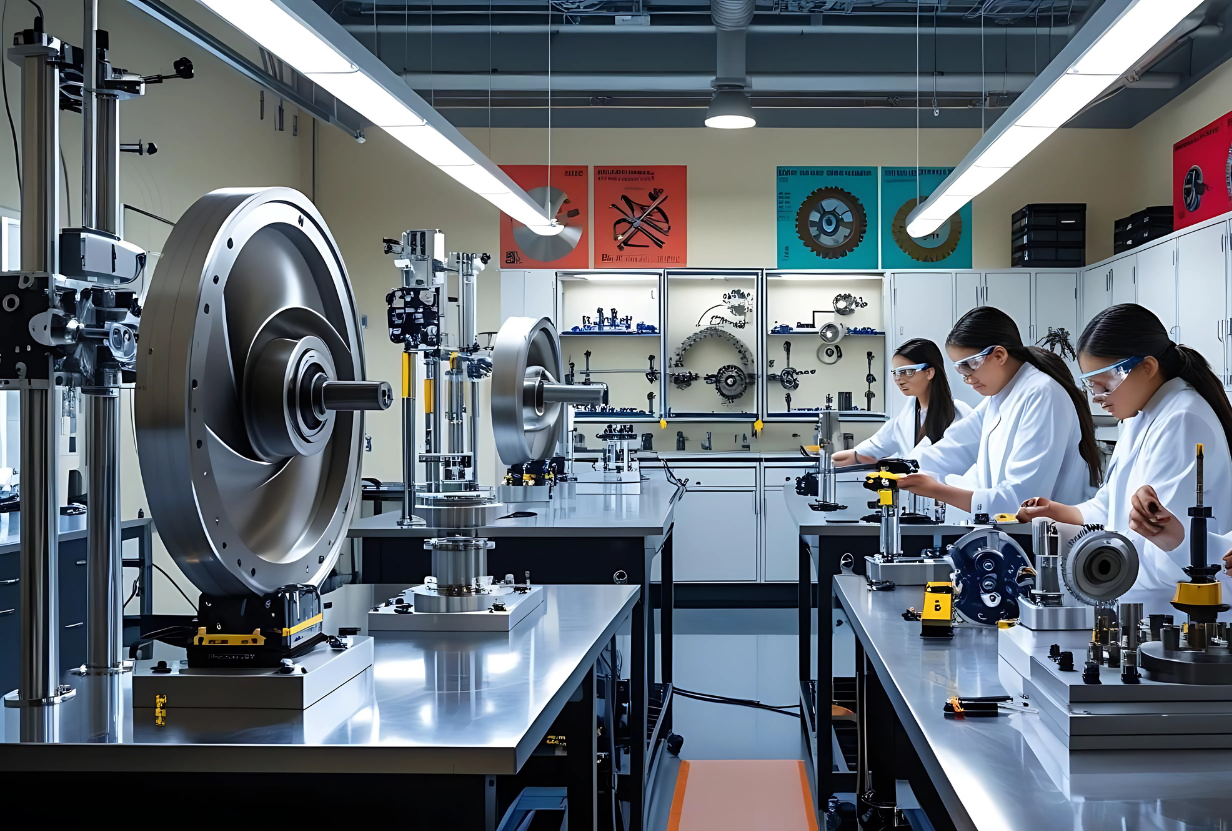
The Dynamics Lab is designed to facilitate learning and experimentation in engineering mechanics, machine dynamics, and system kinematics. It offers hands-on experience in analyzing real-world mechanical systems and validating theoretical principles through physical models. The lab supports studies on rotational motion, friction, gear systems, and vibration analysis—laying a strong foundation in classical and applied dynamics.

🔧 Key Equipment and Components

🔹 Disc Rolling on Inclined Plane
🔹 Flywheel Apparatus
🔹 Bearing Friction Unit
🔹 Dry Friction Apparatus
🔹 Multi-Stage Planetary Gear System
🔹 Gyroscope
🔹 Forces in a Reciprocating Engine
🔹 Worm Gear Setup
Mobirise

Dynamics Lab

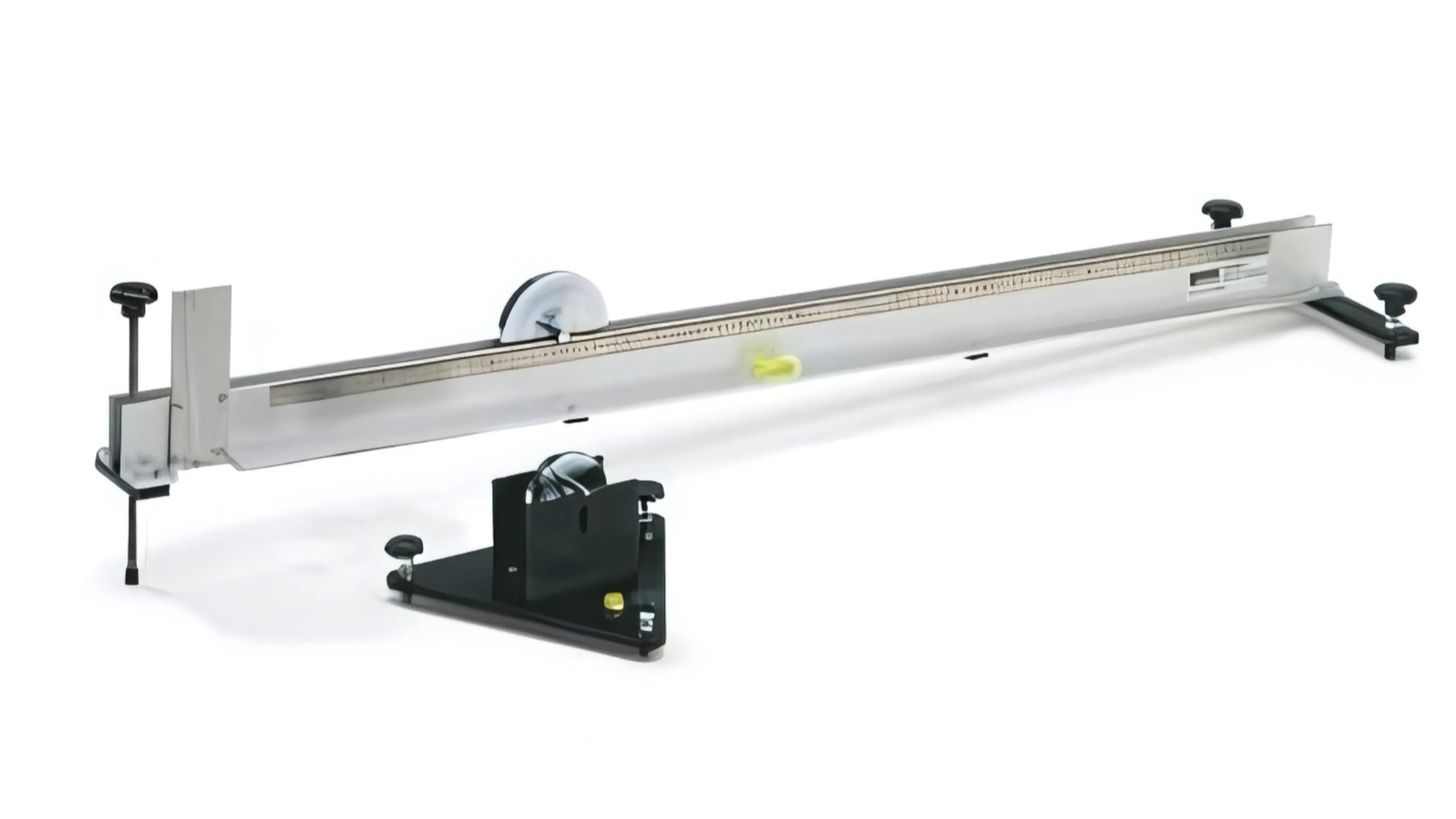
Disc Rolling on Inclined Plane

The mass moment of inertia is a proportionality constant, which depends on both the body and the position of the body’s rotation axis. By measuring the rotary moment and the resulting angular acceleration, we can experimentally determine the mass moment of inertia. The equipment offers rolling experiments on an inclined plane and pendulum experiments with a physical pendulum to determine mass moments of inertia experimentally.

Mobirise

Disc Rolling on Inclined Plane 

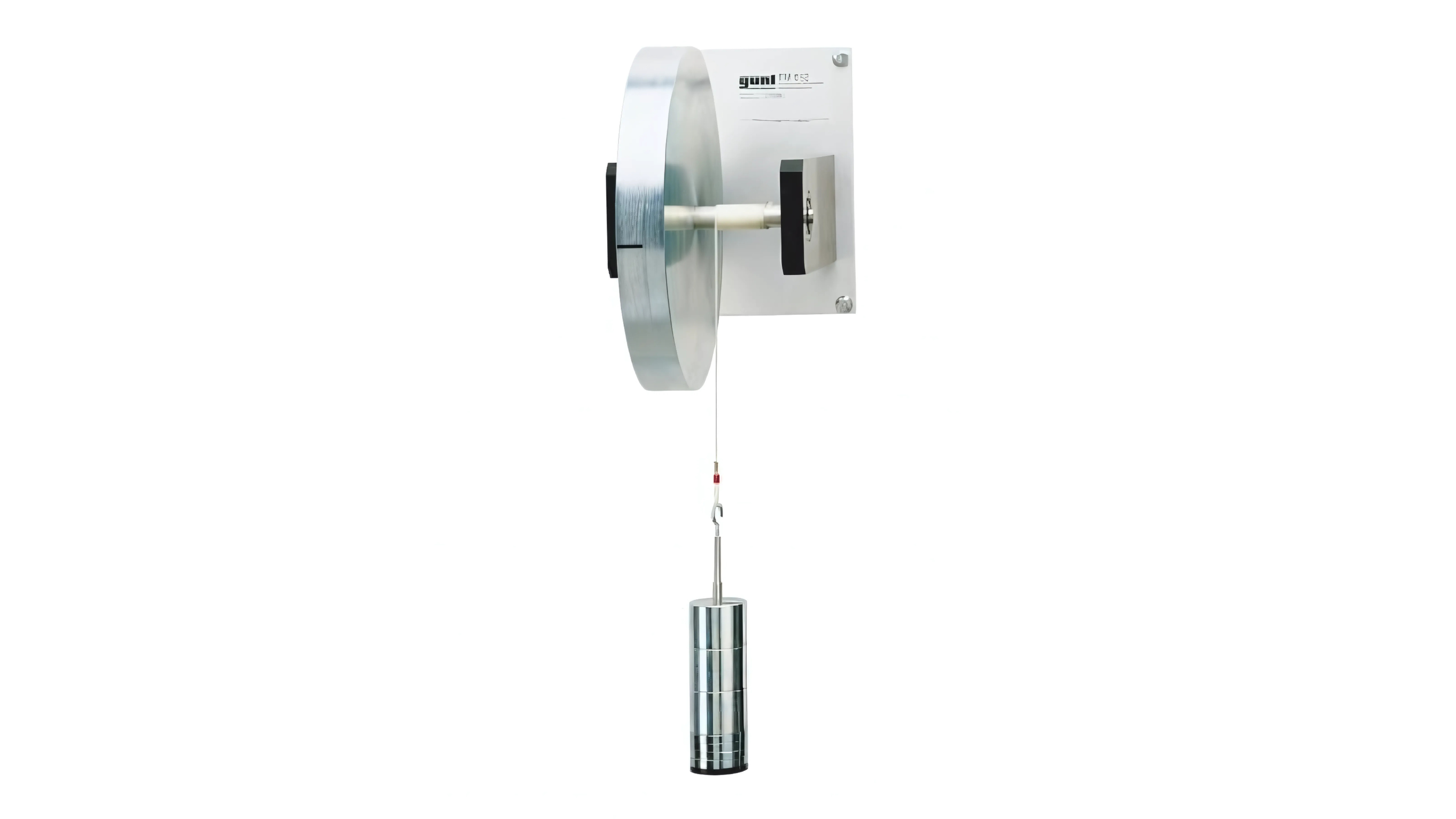
Fly wheel apparatus

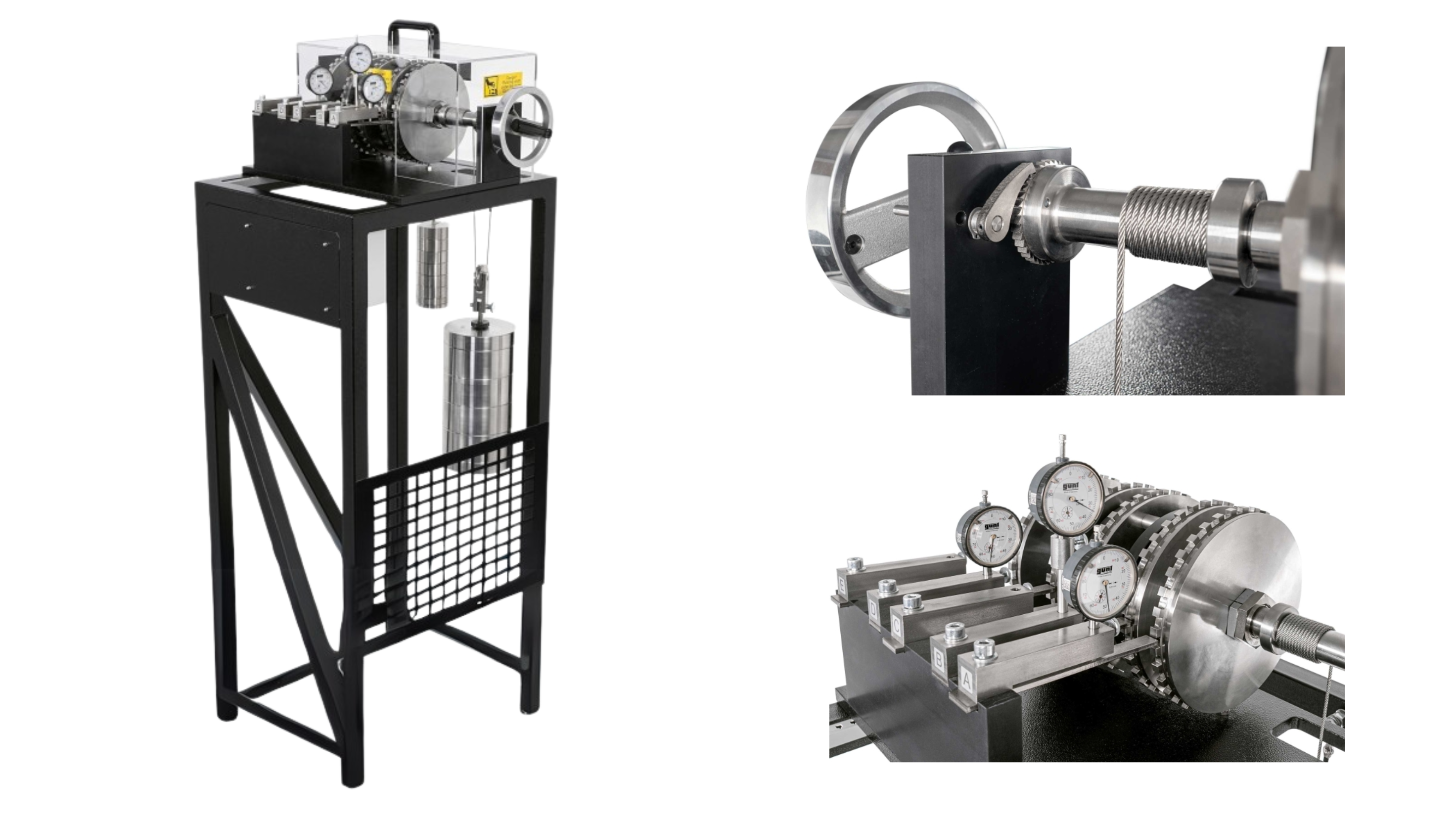
The resistance with which a rigid body opposes a change to its rotation is indicated by the mass moment of inertia. It is a measure of the inertia of a body in rotation. The equipment can be used to conduct basic experiments on uniformly accelerated rotational motion.

Mobirise

Fly wheel apparatus 

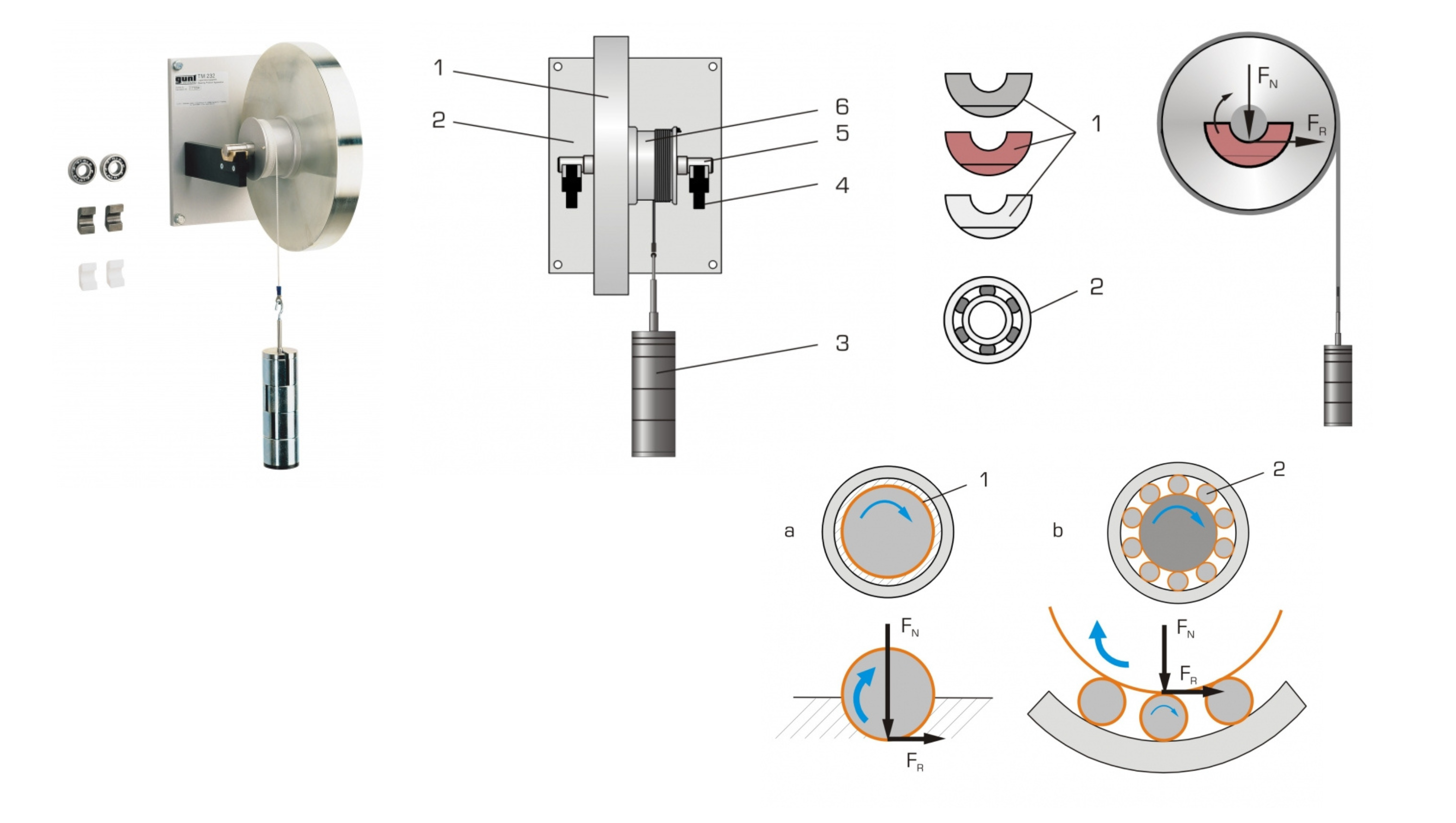
Bearing friction

Bearings can be classified as slide bearings or roller bearings depending on the nature of their motion. In slide bearings, there is a sliding motion between the bearing and the supported component. In roller bearings, there is both sliding motion and rolling motion between rolling bodies and the supported component.
The equipment allows investigations of friction on slide bearings with different bearing shells and on roller bearings.  

Mobirise

Bearing friction 

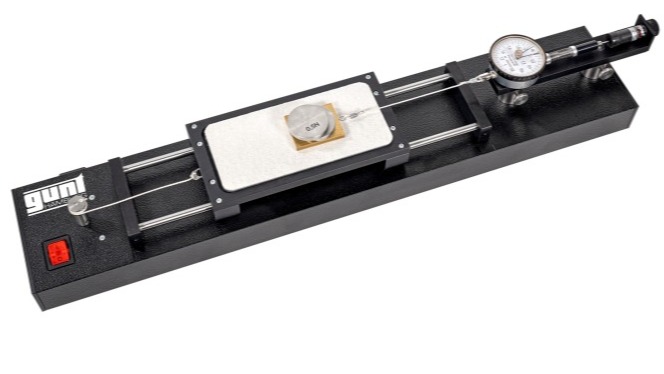
Dry Friction

Friction is a key factor in mechanical engineering. Static friction needs to be adequate to fix components to each other, such as parking brakes, self-locking threads and frictionally engaged connections. Dynamic friction needs to be kept as low as possible, such as on bearings, in guideways or in shaping tools.
The equipment provides a broad range of experiments relating to static and dynamic friction between solid bodies which are in contact with each other and moving relative to each other. Various influences on friction can be investigated, such as surface properties and material pairing. 

Mobirise

Dry Friction

Multi stage planetary Gear system

The planetary gear is a special type of gear drive, in which the multiple planet gears revolve around a centrally arranged sun gear. The planet gears are mounted on a planet carrier and engage positively in an internally toothed ring gear. Torque and power are distributed among several planet gears. Sun gear, planet carrier and ring gear may either be driving, driven or fixed. Planetary gears are used in automotive construction and shipbuilding, as well as for stationary use in turbines and general mechanical engineering. The equipment allows the investigation of the dynamic behaviour of a two-stage planetary gear. 

Mobirise

Multi stage planetary Gear system

Gyroscope

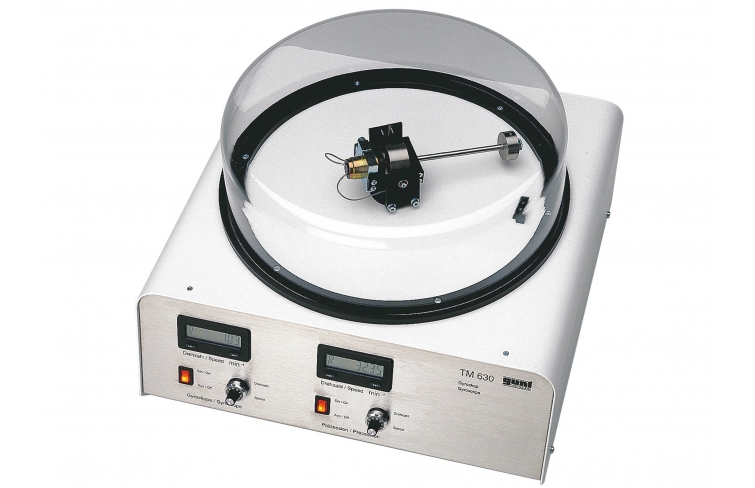
A gyroscope is used in aviation and the aerospace industry to stabilise the position or as a navigation tool in so-called inertial navigation. The basic element of a gyroscope is a rapidly rotating mass. A free gyro tends to maintain the position of its rotational axis in space independently of gravity.
The equipment demonstrates the properties of guided gyroscopes. The moments caused by the precession can be experimentally determined. 

Mobirise

Gyroscope

Forces in a reciprocating engine

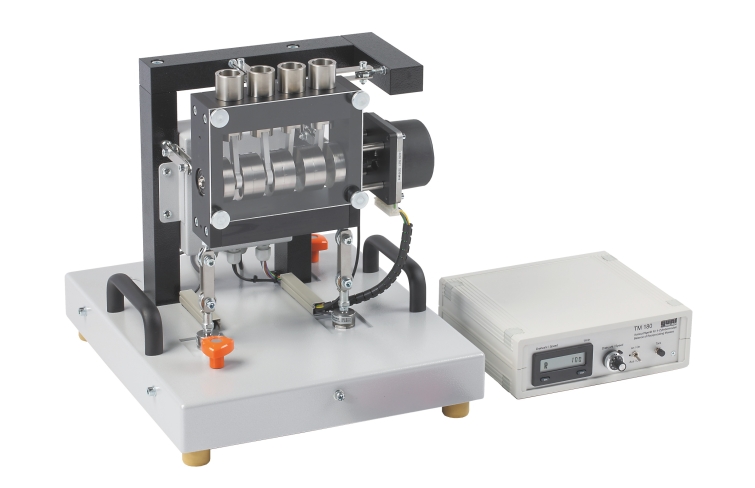
Every reciprocating engine generates mass forces. The mass forces of the oscillating masses cannot be compensated completely, while the mass forces of the rotating masses are fully compensated. By using several cylinders it is possible that the forces compensate each other. However, disturbing moments may still occur.
The equipment enables investigation of the free masses and moments of a reciprocating engine with a single cylinder, with two cylinders or with four cylinders. 

Mobirise

Forces in a reciprocating engine

Worm Gear

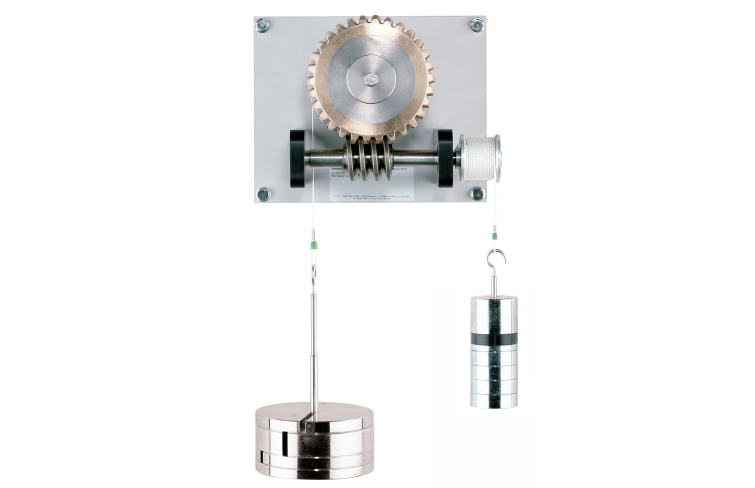
Worm gears are a category of helical rolling gears that are classified as transmission or conversion elements within machine elements. This type of gear comprises the usual driving worm and the driven worm wheel. Worm gears are quiet and have a damping effect. They are smaller and easier to operate than spur gears or bevel gears of the same performance and gear ratios.
The equipment is used to study their torque ratios and efficiency. The transmission ratio of the gear can be determined. The basic concepts of tooting such as tooth number and gear number, module, pitch and centre distance are illustrated. 

Mobirise

Worm Gear

CoE SMEVT

© 2025 CoE IIT Tirupati. 
Made with love for IIT Tirupati.

Social