About the Lab
The Additive Manufacturing Lab is equipped to support advanced research and development in additive manufacturing, reverse engineering, and prototyping. The lab is designed to handle both metallic and polymer-based 3D printing, as well as precision 3D scanning for digital reconstruction of physical components.
Key Equipment and Components
🔹 Metal 3D Printer – EOS M290
Function- High-precision metal 3D printing by selectively fusing fine metal powder using a laser.
Technology- Direct Metal Laser Sintering (DMLS) / Powder Bed Fusion
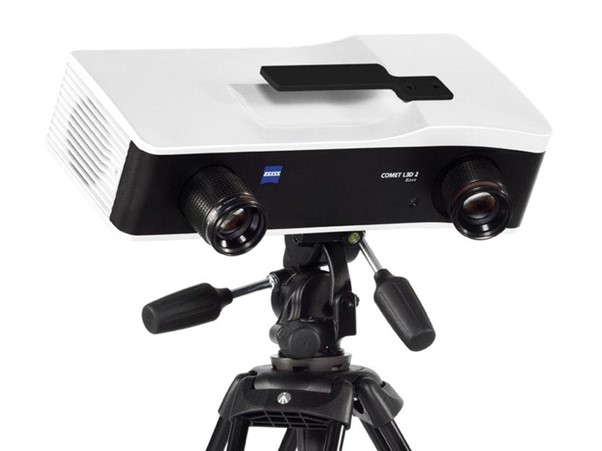
🔹 3D Scanner
Function- Captures the precise geometry of objects to create accurate digital 3D models.
Technology- Triangulation-based scanning to generate dense point clouds.
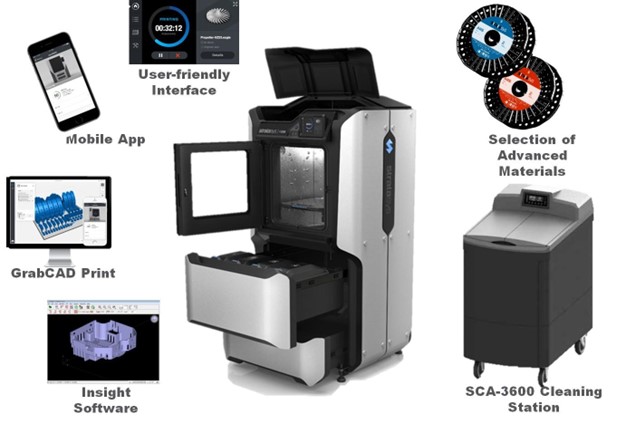
🔹 Polymer FDM 3D Printer
Function- Prints robust polymer parts by extruding thermoplastic filament layer-by-layer.
Technology- Fused Deposition Modeling (FDM)
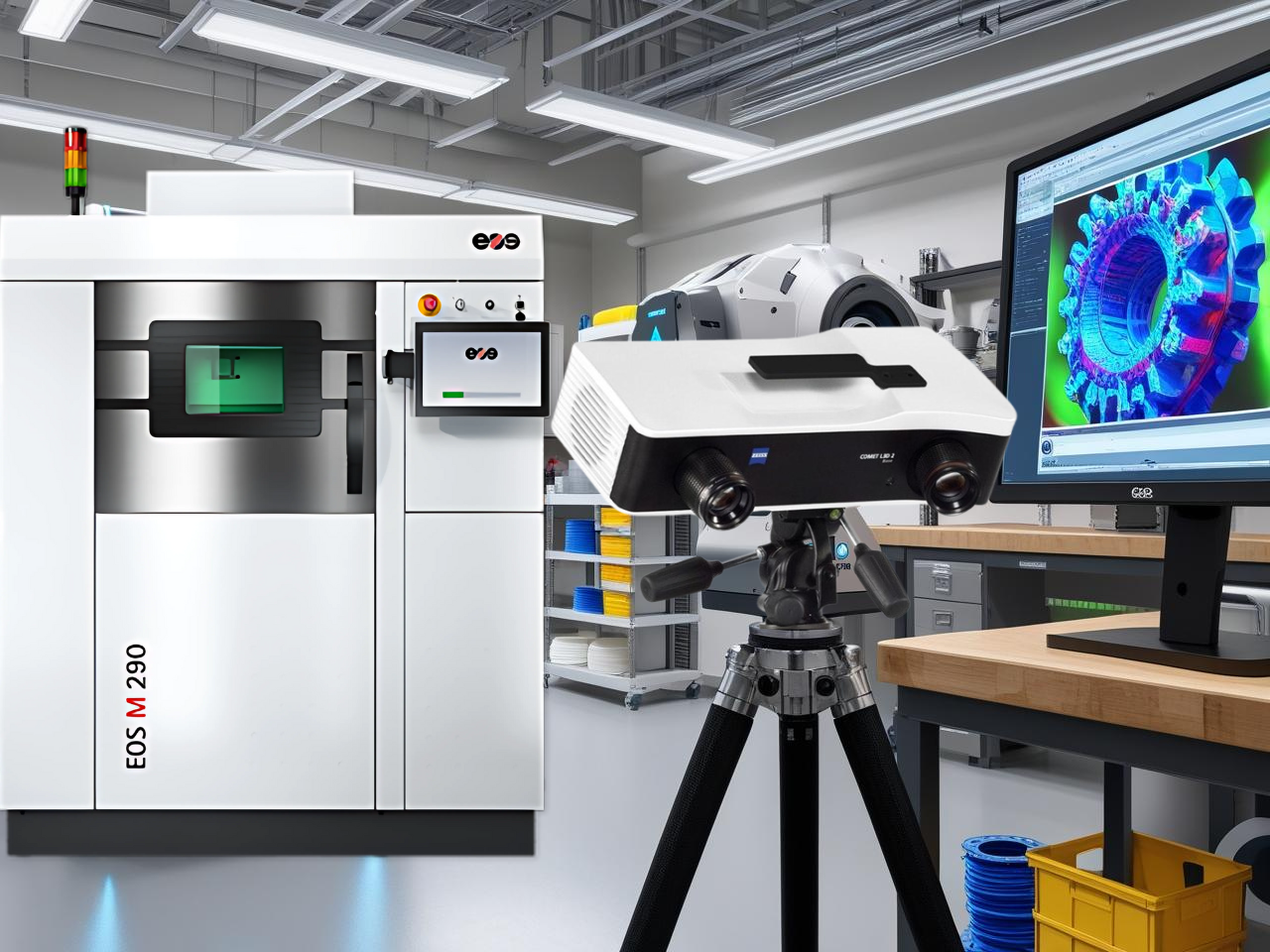
Additive Manufacturing Lab
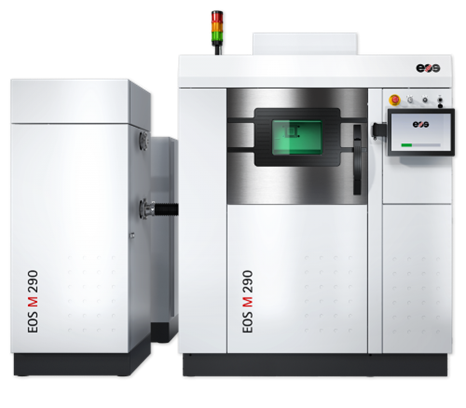
METAL 3D PRINTER EOS M290
Powder bed fusion is the most mature type of metal 3D printing and is the incumbent technology.
How Powder Bed Fusion Works
A laser mounted on a gantry traces the path of a given layer, precisely fusing the metal powder.
1. A powder distribution system pushes a new layer of loose powder over the forming part.
2. The laser fuses the next layer, and the process repeats.
3. After printing, parts are depowered and post-processed as needed.
The EOS M 290 has the most extensive range of validated materials and processes on the market. EOS metal materials are designed specifically for DMLS and are quality-controlled. EOS processes are validated, ensuring consistent and repeatable part quality. Explore below which metal materials and methods are compatible with the EOS M 290.
EOS M290 3D Printer
3D SCANNER
3D scanning is a technique for creating digital 3D models of objects, structures, and environments by collecting data about their shape and appearance.
3D scanners are able to identify 3D points, calculated from photos and depth measurement using triangulation, with each point appearing on the screen individually. Altogether, these 3D points form a point cloud, which appear like in the image below. The process of extrapolating the shape of a subject from points is known as reconstruction.
3D Scanner
POLYMER FDM
FDM 3D printed parts are tough enough to be used as advanced conceptual models, functional prototypes, manufacturing tools and production parts. Using strong, reliable, and durable materials, FDM 3D printers streamline production processes from design through manufacturing, reducing costs and eliminating traditional barriers along the way.
Polymer FDM interface